

















The B2B Paradox: Why Journey Execution is Stalling
The rapid acceleration of innovation, particularly in AI, has promised a new era of efficiency. Yet, for many B2B marketing teams, confidence is low. How do we keep pace with continuous platform updates, apply AI for real commercial impact, and drive change without exhausting our teams? The core issue is not a lack of new tools. Instead, it is a failure to realize full value from existing Martech investments. Our systems are simply not set up to execute the complex, multi-touch journeys that today’s B2B landscape demands.
The B2B buying reality is stark: decisions involve a committee of 6 to 13 stakeholders per deal. Traditional, lead-centric funnels are structurally ill-equipped to handle this complexity. As a result, they often lead to a mismatch where individual leads appear ‘qualified’ while the full buying committee remains disengaged. This, in turn, leads directly to stalled deals. Account Based Marketing flipped this on its head and started with target accounts in order to find as many stakeholders as possible. The latest model, Buying Group Marketing, sits in the middle and focuses on understanding exactly who is in the buying committee for your specific product. Really successful B2B Marketing is not based on either of these three methods. Instead, it uses all three for different purposes. But without the right operational foundation, the transition remains aspirational.
Before adopting the next wave of automation, the focus must be on foundational maturity. One of the three most critical foundations is Journey Orchestration: the ability to design and deliver scalable customer journeys across all channels. This ensures alignment between marketing and sales and, crucially, the ability to personalize and adapt journeys as buyer behaviour changes.
The Connected Stack: A Prerequisite for Buying Group Orchestration
A disconnected technology stack inflicts a significant, often hidden, operational tax that cripples journey orchestration efforts. This ‘Hidden Friction’ manifests as several critical workflow failures:
- Buying Group Blindness: If your stack is disconnected, you are blind to 80% of the buying committee, missing engagement signals from the multitude of roles involved in a deal. You cannot orchestrate a buying group journey if you can’t see the group.
- Inefficient Workflows: Manual execution of campaigns and processes, like using “clone and go” methodologies or copy-pasting briefs, is not just annoying; it’s a massive drain on costs and speed-to-market.
- Limited Personalization: Most organizations struggle to go beyond basic email token personalization. This results in manual, inconsistent nurture journeys that fail to engage modern B2B buyers.
The Connected Stack approach turns this technical overhead into a strategic revenue engine. By unifying fragmented data, the foundation moves beyond simple lead records to a hierarchical, multi-entity architecture. This approach treats people, accounts, and opportunities as interconnected nodes. This unified view is what enables the next level of journey orchestration: the ability to find and target the entire buying group, not just an isolated lead.

Re-engineering the Workflow: The Content Supply Chain Fix
One of the most complex workflows in B2B marketing is the Content Supply Chain: the process of planning, delivering, and measuring messaging. When disconnected, the friction is immense; when connected, it unlocks exponential execution speed.
Adobe’s vision for the Content Supply Chain focuses on eliminating the manual handoffs and silos that slow down campaign build times:
- Campaign Planning as a Unified Hub: By serving as a connected intake hub for all campaigns, the supply chain provides immediate visibility and proofing across marketing and creative teams.
- Personalization at Scale: Crucially for journey orchestration, the Connected Stack uses GenAI to create unique email and conversational content. It is tailored to the specific roles within a buying group, not just the individual recipient.
- Efficiency at Scale: Connecting Creative and Experience Clouds automates the “Brief-to-Build” process, which can free teams for strategic work. This also allows for campaign launches up to 15x faster. This operational streamlining is the heart of effective workflow management.
Streamlined programs and a unified system running cleaner directly make journeys faster to build and exponentially easier to optimize.
The Hidden Cost of Disconnected Journeys
The financial and operational costs of continuing to treat B2B accounts as isolated leads, rather than unified buying committees, are crippling:
- Lost Conversions & Sales Opportunities: Failing to orchestrate journeys for the entire buying group creates a massive conversion bottleneck. Enterprises that shift from individual lead nurturing to activating unified buying group journeys see substantially improved lead-to-opportunity conversion and significantly higher buying group engagement.
- Execution Drag: Manual execution creates severe operational bottlenecks that cripple campaign build speed and time-to-market. Organizations that untangle their workflows and unify their operational supply chain drastically accelerate campaign build times.
- The Cost of Generic Personalization: Transitioning from basic, static email blasts to AI-optimized, data-driven, omnichannel campaigns yields significantly greater returns on investment.

Download
Building a marketing tech stack
Wherever you are in the marketing automation maturation process, your tech stack can have a big impact & should not be underestimated. Download our framework to discover how to optimize your MarTech stack.
Actionable Steps: Accelerating Your Journey Orchestration Maturity
To move forward, B2B leaders must focus on operational fixes that simplify and scale their journey design. These are steps that you can take tomorrow to get started.
Journey Orchestration: Define the Committee & Simplify
- Action: Sit down with Sales to explicitly define the three to five key roles in your buying committee (e.g., Decision Maker, Champion, Technical Evaluator). Then, replace manual “clone and go” campaigns with scalable, tokenized templates.
- Impact: This reclaims wasted operational hours immediately and establishes the exact buying roles your future AI agents will need to target for hyper-personalization.
By standardizing processes and consolidating platforms, one client successfully transformed from a model plagued by “Platform Fatigue” to a single, governed revenue engine. The key steps focused on journey execution:
- Designing scalable lifecycle and campaign frameworks.
- Standardizing marketing processes across all business units (e.g., list upload, campaign QA).
- Building and testing new automated always-on journeys.
The result was clear: decision-making became faster because teams trusted the data and insights, and the organisation now has the foundations required to adopt AI and advanced orchestration.
JTF Revenue Acceleration Loop
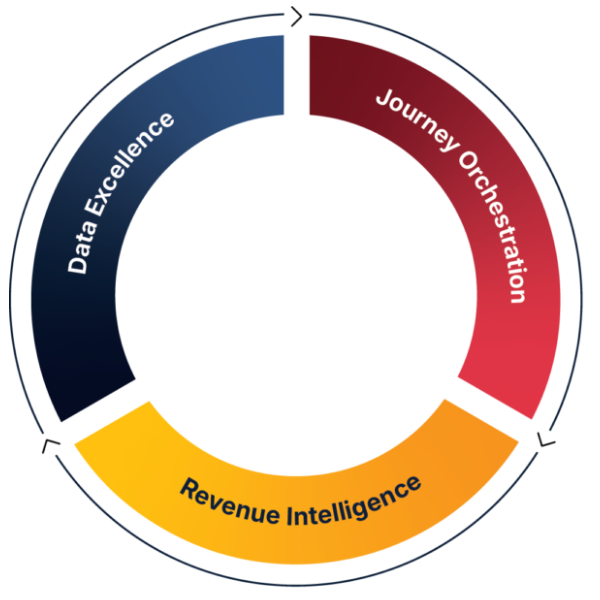
How a Connected Stack Fits Into the Revenue Acceleration Loop
For many Marketing Operations teams, the shift to a Connected Stack hasn’t just changed how tools integrate – it has reshaped the foundations of how your journey orchestration operates.
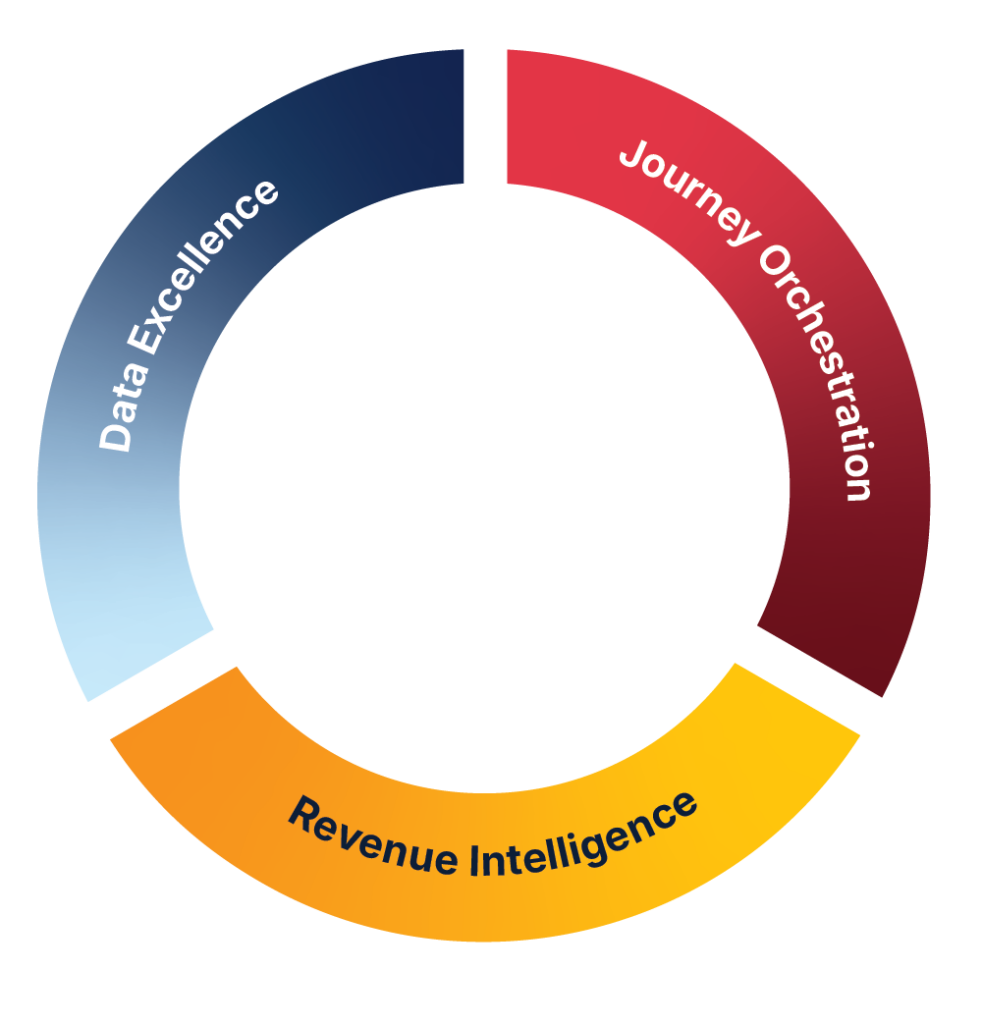
And within the Revenue Acceleration Loop, this isn’t a peripheral concern. It directly affects the stability, scalability, and performance of all three pillars: Data Excellence, Journey Orchestration, and Revenue Intelligence.
Conclusion: Future-Proofing Your B2B Workflows
Technology does not create an advantage. How you connect, adopt, and use it does.
The Connected Stack directly addresses the critical need for B2B workflow and journey maturity. By focusing intensely on Journey Orchestration (standardizing processes, defining buying committees, and implementing a unified content supply chain) organizations can eliminate the hidden operational taxes that stifle growth.
Prepare your organization before the next wave arrives:
- Focus on the Route to Revenue: Every activity must be measurable, accountable, and aligned to growth.
- Connect the Stack: Ensure marketing, sales, and operations are all working from the same system of truth.
When the foundations for scalable journey execution are strong, advanced capabilities like generative AI stop being complex experiments and start becoming decisive business advantages.
Take the next step
Do you want to understand more about Buying Groups, Send Time Personalization or Journey Orchestration as a whole?
Contact us to get a 30min audit review.
Connect with Katja on LinkedIn.
Frequently Asked Questions
The primary issue is “Buying Group Blindness” caused by a disconnected technology stack. When Martech tools don’t communicate, teams can only see individual leads rather than the 6–13 stakeholders involved in a typical B2B buying committee, leading to disengaged decision-makers and stalled deals.
A connected stack eliminates manual handoffs and silos. By unifying campaign planning and using generative AI for role-specific personalization, organizations can automate the “Brief-to-Build” process. This can result in campaign launches that are up to 15 times faster than traditional manual methods.
Lead-centric models focus on qualifying individual people, which often fails in B2B where decisions are made by committees. Buying Group Marketing focuses on identifying and engaging the specific roles (Decision Makers, Champions, Technical Evaluators) within a target account to ensure the entire committee is aligned.
Start by sitting down with your Sales team to define the 3–5 key roles in your buying committee. Simultaneously, replace manual “clone and go” campaign processes with scalable, tokenized templates to reclaim operational hours and improve data governance.
AI requires clean, standardized data and a unified system of truth to function effectively. Without a foundation of journey orchestration and a connected stack, AI remains a complex experiment rather than a strategic tool for hyper-personalization and revenue growth.