


















Introduction
We celebrate when a Director downloads a whitepaper.
Meanwhile, the CFO who signs the cheque has never heard of us.
That is the uncomfortable truth at the heart of modern B2B revenue. We are still optimizing for individual engagement in a world where decisions are collective.
Let me be clear. The MQL is not the villain in this story. A Marketing Qualified Lead is exactly what it claims to be. It tells us that the right type of person is engaging with our message. That is useful.
What it does not tell us is whether that person can influence a deal.
It does not tell us who else is involved.
It does not tell us whether we are building consensus or walking into resistance.
The problem is not the metric. The problem is the operating model wrapped around it.
Most enterprise revenue engines are still built on a lead-centric architecture. Reporting, handoffs, dashboards and board conversations all revolve around individual activity. Yet complex B2B decisions are made by committees of six, eight or ten stakeholders.
We are optimizing for a game that no longer exists.
The Real Unit of Revenue
In enterprise and mid-market sales, the real unit of revenue is not the lead. It is the buying group.
Sales teams understand this instinctively. No experienced account executive believes a deal is safe because one enthusiastic Champion is engaged. They know the deal is only real when the economic buyer is aligned, procurement is comfortable, IT is reassured and no silent blocker is waiting to surface at the eleventh hour.
The misalignment sits elsewhere.
Marketing systems track individuals.
Revenue dashboards report on volume.
Boards are shown trends in MQL growth.
Meanwhile, sales is trying to navigate a web of internal politics with fragmented data and incomplete visibility.
We do not have a capability problem. We have a structural one.
If you want to generate predictable enterprise revenue, you must shift your mindset from lead-centricity to buying group orchestration.
The Cast Around the Table
Buying groups are not just collections of job titles. They are roles in a decision dynamic.
Typically you will encounter:
- The Champion: The internal advocate who wants change and needs ammunition to sell it internally.
- The Decision Maker: Focused on ROI, risk mitigation and strategic alignment.
- The Influencer or End User: Concerned with usability, operational impact and practical fit.
- The Blocker: Often in IT, security or legal. Ignore them and they will quietly kill the deal.
- The Economic Buyer: The one with budget authority, sometimes highly visible, sometimes not.
Each role has different motivations. Each consumes information differently. Each enters the journey at a different moment.
The mistake we make is assuming they move through a funnel together.
They do not.
The Messy Middle
The traditional funnel is comforting because it is clean. Awareness becomes consideration. Consideration becomes decision.
Reality is far messier.
Your Champion may engage at the beginning.
The Decision Maker may only visit your website once, three days before approval.
The CFO may never download a single asset.
IT may only appear at stage four and introduce a compliance concern that resets the entire conversation.
This is not a linear journey. It is a web of asynchronous interactions inside one account.
If marketing only nurtures the visible contact in the database, we are orchestrating for a fraction of the real decision dynamic.
The answer is not more campaigns. It is threaded journeys. Parallel engagement tracks running simultaneously within the same account. Different stories, different content and different touchpoints designed to influence distinct roles at the right time.
Not more noise. More precision
Sales Already Sells to Buying Groups
Here is the irony. Sales teams already sell to buying groups.
They know that without everyone on side, the deal can collapse in an instant. They understand that silence from a CFO is not neutrality. It is risk.
Yet we often equip them poorly.
We flood them with activity data and expect them to make sense of it. A thousand touchpoints, scattered signals and a CRM record that does not reflect the true influence map.
What sales actually needs is simpler and more strategic:
- Who is missing from the buying group?
- Who is engaged?
- Who is cold?
- Who may be a negative influencer?
- Where do we need senior-to-senior alignment?
This is why Account-Based Marketing can be transformative and why it can fail spectacularly.
It works when it fills the buying group.
It fails when it becomes a media tactic disconnected from behavior.
Buying group orchestration is not a technology feature. It is a behavioral shift supported by technology.
The $2 Million Lesson
I learned this the hard way.
In the SaaS world, I saw a $2 million deal riding on the decision of a CFO. The opportunity looked healthy. The Champion was engaged. The pipeline stage was advanced.
The problem was simple. The CFO was not even in the company’s database.
No engagement tracking.
No targeted messaging.
No executive outreach.
The opportunity team believed they understood the buying group. In reality, it was incomplete. Sales pointed at marketing for visibility. Marketing pointed at sales for access.
Meanwhile, there was no senior leadership involvement from the vendor side. No executive conversation. No peer-level dialogue. No informal relationship building that often sways enterprise decisions in ways dashboards cannot capture.
When the CFO hesitated, the deal stalled. Then it disappeared.
The lesson was brutal and clear. Silence from the C-suite is not neutrality. It is a threat.
If you are not orchestrating influence across the buying table, you are exposed.

Webinar On demand
Moving from Lead to Buying Group Marketing
Watch JTF’s fast-paced, insight-rich webinar exploring how Buying Group Marketing is redefining go-to-market strategy.
Powered by Adobe’s Marketo Engage and AJO B2B Edition, this session will show you how to engage real decision-makers – not just isolated leads.
Attribution and the Illusion of Precision
Another trap sits in attribution.
I have seen marketing teams fight to be credited for “brand sales.” The reality is there is no perfect formula to measure brand impact in isolation. So we look for the nearest proxy. Often that becomes last touch attribution.
It feels precise. It rarely is.
Attribution modelling is not useless. It helps practitioners understand whether channels engage the right personas. It helps optimize media spend.
But when attribution becomes the centerpiece of the marketing conversation, we have lost the plot.
The real question is not “Which touchpoint sourced this deal?”
It is “Did we create the conditions for this account to choose us?”
At JTF, we use an arbitrary 30 percent attribution of all revenue to marketing. It funds brand activity and reinforces the principle that marketing is a strategic growth function, not a cost centre chasing proof.
If the account wins, everyone wins.
Revenue contribution matters more than attribution theatre.
The Operating Model Shift
Moving to buying group orchestration is not a campaign adjustment. It is an operating model transformation.
It requires leaders to rethink:
- From Leads to Qualified Accounts
- From Lead Score to Buying Group Coverage
- From Volume Metrics to Account Influence
- From Campaign Calendars to Account Orchestration
- From Marketing vs Sales to Shared Revenue Architecture
This shift has commercial consequences.
In the short term, deal cycles may look longer because opportunities are opened earlier in the process. Conversion rates may dip as visibility increases and assumptions are tested.
In the medium to long term, something else happens.
Deal sizes increase because relationships deepen.
Retention improves because expectations are aligned early.
Onboarding accelerates because stakeholders are already engaged.
Forecasting becomes more grounded in real influence, not individual enthusiasm.
You stop filling in paperwork and start building partnerships.
That is the difference between activity and revenue.
The Complexity Trap
There is a temptation to systemize everything.
ABM platforms. Buying group models. CRM redesigns. Advanced scoring frameworks. Some organizations attempt to map journeys so complex they resemble a metropolitan subway map.
Then they never launch.
Technology is catching up. Enterprise stacks are evolving to better support buying group marketing. CRM systems are beginning to reflect account dynamics more accurately.
But buying group orchestration starts with behavior.
Start simple.
Three core roles.
Three key stages.
Clear visibility into coverage and gaps.
Shared accountability between marketing and sales.
Build from there.
Perfection is paralysis. Progress is orchestration.
The CEO Challenge
Boards understand leads because we have trained them to. MQL volume is a safe bet in reporting. It is familiar. It feels tangible.
But with the rise of CROs and revenue-focused marketing leadership, the conversation is shifting. The expectation is no longer activity. It is impact.
If you explain buying group orchestration in commercial language, C-suite leaders are ready for it.
Frame it as:
- Reduced late-stage losses.
- Improved win rates.
- Greater deal resilience.
- Stronger retention.
- Clearer forecast visibility.
This is not a marketing evolution. It is a revenue evolution.
The question is not whether the MQL is dead.
The question is whether you are prepared to admit that a single engaged contact does not equal a viable deal.
Are you optimizing for individual activity or collective influence?
Are you selling to a person, or enabling a buying group?
Orchestration Is a Mindset
The lead is not dead.
The idea that a lead equals revenue is dead.
In complex B2B environments, the unit of growth is the buying group. Orchestrating that group requires alignment across marketing, sales, leadership and customer success. It requires new metrics. New conversations. New discipline.
Most importantly, it requires courage.
Courage to move beyond safe metrics.
Courage to expose gaps in buying group coverage.
Courage to align incentives around shared revenue outcomes.
If you are serious about predictable enterprise growth, the shift is inevitable.
The only question is whether you will lead it or be forced into it.
At JTF, we have already made that transition. We understand what it means operationally, culturally and commercially.
The opportunity for you is simple.
Are you ready to stop celebrating downloads and start orchestrating decisions?
If so, it is time to assess your buying group maturity and design a revenue engine built for the way modern B2B decisions are actually made.
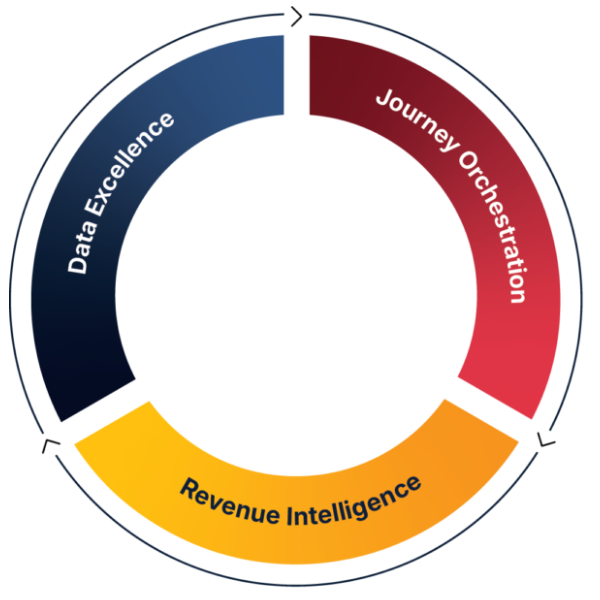
JTF Revenue Acceleration Loop
How Marketing‑Qualified Buying Groups Power the Revenue Acceleration Loop
Marketing‑qualified buying groups sit at the heart of the Revenue Acceleration Loop because they transform how organizations recognize, prioritize, and progress real demand.
Instead of chasing isolated leads, buying‑group intelligence gives you a dynamic, account‑level view of who is actually in-market – and how far along they are in their collective decision-making journey.
Conclusion
Modern B2B revenue growth no longer happens through isolated leads. It happens through coordinated influence across the entire buying group.
Marketing Qualified Leads still provide useful signals, but they only tell part of the story. Real commercial momentum emerges when marketing and sales understand who is involved in the decision, what each stakeholder cares about, and where influence gaps exist inside the account.
Shifting from lead-centric metrics to buying group orchestration requires more than new campaigns or tools. It requires a new operating model. One where marketing, sales, and leadership share visibility into account dynamics and work together to build consensus across the decision table.
Organizations that make this shift move beyond celebrating activity and start building predictable revenue engines. They reduce late-stage surprises, strengthen deal resilience, and create deeper commercial relationships with their customers.
The question is not whether leads still matter.
The question is whether your revenue strategy reflects how modern B2B decisions are actually made.
If you’re ready to move beyond lead-centric thinking and start orchestrating buying groups, JTF can help you assess your current maturity and design a revenue engine built for the realities of enterprise selling.
Take the next step
Speak to someone who gets it
For organizations looking to go deeper, JTF offers a Revenue Strategy Audit designed to help teams understand where performance is being constrained and where improvements can be made.
Connect with James on LinkedIn.
Frequently Asked Questions
A buying group is the collection of stakeholders involved in a purchasing decision within an organization. In complex B2B deals, this often includes champions, decision makers, economic buyers, end users, procurement teams, and potential blockers such as IT or legal. Modern revenue teams must engage multiple roles within the same account rather than focusing on a single lead.
MQLs indicate that an individual has engaged with marketing content, but they do not reflect the full decision-making dynamic within an organization. Enterprise deals are typically approved by committees, not individuals. Relying solely on MQLs can create a false sense of momentum if other key stakeholders in the buying group are not engaged.
Buying group orchestration ensures that multiple stakeholders within an account are engaged with relevant messaging throughout the decision process. This approach improves deal resilience, reduces late-stage objections, and increases win rates because consensus is built across the entire decision-making group.
Account-Based Marketing helps organizations focus on strategically important accounts and engage multiple stakeholders within them. When executed correctly, ABM aligns marketing and sales efforts to influence the entire buying group rather than generating individual leads that may not translate into real opportunities.
Instead of focusing solely on lead volume, organizations should measure account-level engagement and buying group coverage. Metrics such as stakeholder engagement across roles, account influence, pipeline quality, and deal progression provide a clearer picture of revenue health in complex B2B environments.