


















Your CMO walks into your office asking for a status update on Q1 campaigns. You know the answer, but it’ll take checking 7 different spreadsheets, scrolling through 12 email threads, and pinging 4 people on MS Teams/Google Chat to piece it together. By the time you respond, you’ve lost an hour, if not more, and potentially your CMO’s confidence in your systems.
If this feels familiar, you’re not alone, and there’s no better time to address it than now. As marketing leaders finalize Q1 priorities and set the foundation for the year ahead, the limitations of spreadsheet-based work management become impossible to ignore. The teams that act now won’t just survive peak season, they’ll establish the operating model that carries them through the next five years.
Growing Marketing Teams Hit a Familiar Wall
What starts as a handful of campaigns managed in spreadsheets, email threads, and chat channels quickly becomes unmanageable. Requests come in from everywhere. Priorities clash. Approvals slow down. Nothing feels visible, auditable, or scalable.
This is where many teams make a mistake. They buy a basic project or campaign management tool to “fix marketing execution,” only to outgrow it within 18–24 months and repeat the process all over again.
Adobe Workfront is different. When implemented properly, it does not just manage campaigns, projects and requests. It becomes the operating system for marketing.
Workfront Is Not a Project Tool. It Is an Operating Model
At its core, Workfront gives marketing teams a single place to plan, prioritise, execute, approve, and measure work. But the real value appears as teams grow.
Instead of managing work reactively, marketing leaders gain a structured, repeatable operating model that scales with headcount, channels, regions, and complexity.
Think of it as the central nervous system for marketing operations. The connective tissue between strategic planning and tactical execution. While your marketing automation platform handles email sends and your DAM stores assets, Workfront ensures every request, priority, deadline, and dependency flows through one intelligent system that connects what needs to happen with who’s doing it and when.
This is why Workfront works so well for growing teams.
One Intake for Every Request
As organisations scale, the biggest problem is not execution. It’s demand.
Campaign requests arrive via email, Slack, Chat, hallway conversations, and spreadsheets. Critical information is missing. Priorities are unclear. Work gets duplicated or lost.
Workfront request queues solve this properly.
Campaign teams, CRM teams, sales, leadership, and regional stakeholders all submit work through structured request forms. Every request lands in one place, with the right data, routed automatically to the right team.
No chasing. No guesswork. No lost messages.
Marketing finally controls demand instead of reacting to it.
Capacity Visibility That Prevents Burnout
Spreadsheets can track tasks, but they can’t show you that Sarah is at 140% capacity while Tom has availability next week. Workfront’s resource management capabilities give marketing leaders real-time visibility into team capacity, project allocation, and bottlenecks before they become crises.
You can finally answer “Can we take on this rush campaign?” with data instead of guesswork.
This visibility doesn’t just improve planning, it prevents burnout by distributing work intelligently across your team. When you can see who’s overloaded and who has capacity, you make better decisions about assignments, deadlines, and when to push back on unrealistic requests.

Watch on-demand
From Spreadsheets to Control
Catch up on this session to see how Workfront gives you a single, structured system to plan campaigns, manage requests, and scale without the chaos.
You’ll learn how to replace manual planning with real‑time visibility, build predictable workflows, centralise intake, and create the operational foundation needed to grow with confidence.
Campaigns and Marketing Projects in One System
Most teams treat campaigns and marketing operations work as separate worlds. That is a mistake.
In reality, marketing teams are constantly running non-campaign projects such as:
- Marketo and CRM integrations
- Data and consent changes
- New templates and frameworks
- Reporting and dashboard builds
- Process redesign and optimisation
With Workfront, campaigns and operational initiatives are managed side by side using the same governance, resourcing, timelines, and reporting.
This is critical as teams mature. Marketing operations stop being invisible and start being measurable.
Built-In Proofing and Approval at Scale
As teams grow, content volume explodes. Emails, landing pages, ads, documents, and video all need review and approval.
Email threads and comments in documents do not scale. They introduce risk, slow teams down, and destroy auditability.
Workfront Proof provides structured review and approval workflows with full audit trails. Every comment, change, and approval is captured in one place.
For regulated industries, this is non-negotiable. For fast-moving teams, it is the only way to maintain velocity without losing control.
Automated Content Workflows with Fusion
Growth introduces complexity. More channels. More tools. More regions.
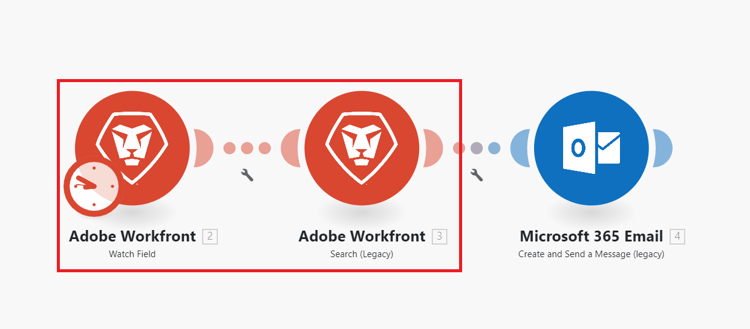
Workfront Fusion allows teams to connect Workfront to the rest of the marketing ecosystem. Approved content can be automatically pushed into email platforms, social tools, DAMs, and other systems.
This is how teams move from manual execution to automated content supply chains.
Work is requested, created, approved, and distributed with minimal friction. Humans focus on strategy and quality, not administration.
AI as a Value Add, Not a New Shiny Tool
Once the foundation is in place, AI becomes genuinely valuable.
Teams can use AI to:
- Create and adapt content for different markets
- Localise messaging across languages
- Produce persona-specific variations at scale
- Summarise briefs, feedback, and changes
- Accelerate campaign execution without increasing headcount
With Firefly and Frame.io, this extends into AI-assisted image creation, video review, and video approvals.
AI works because the underlying workflows are structured. Without that foundation, AI simply accelerates chaos.
JTF Revenue Acceleration Loop
How Workfront Fits Into JTF’s Revenue Acceleration Loop
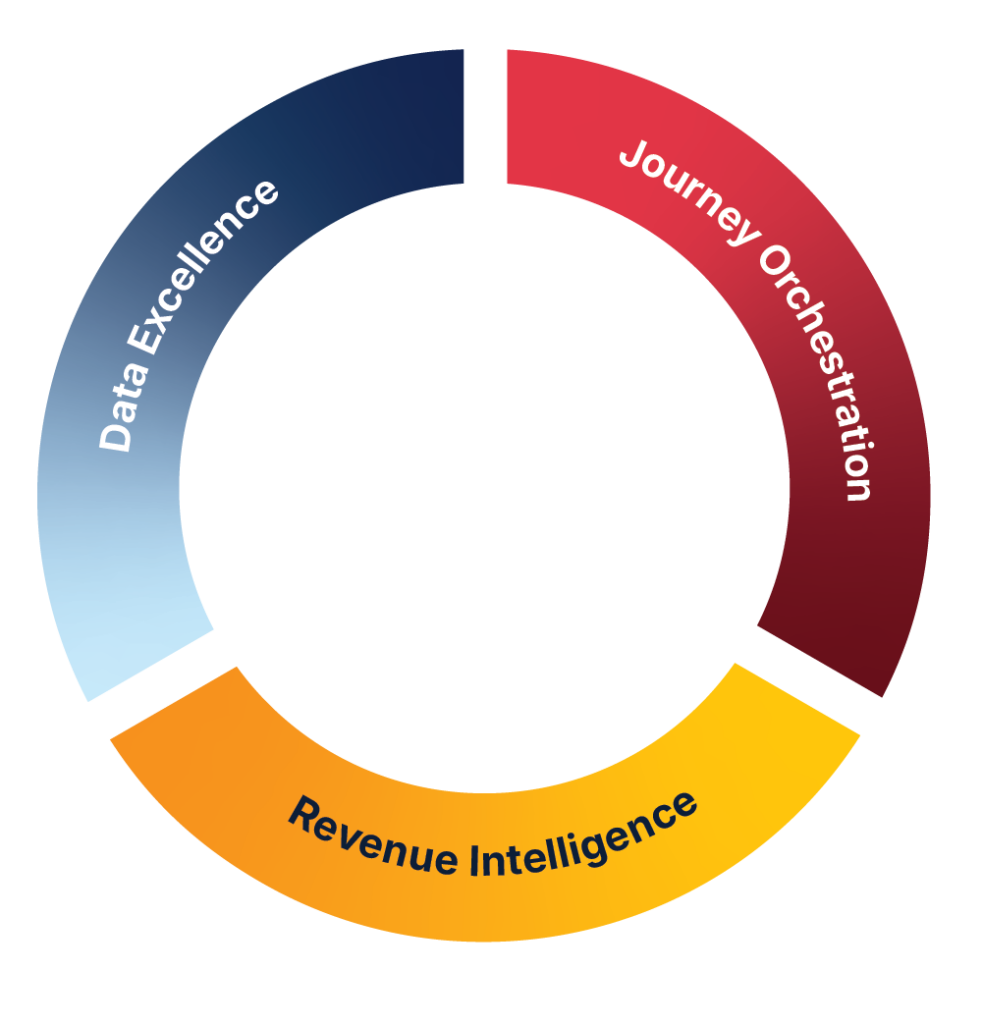
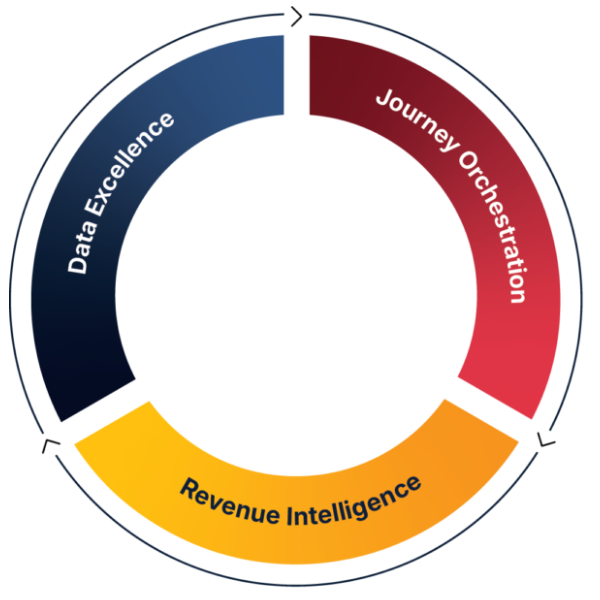
At JTF, we see Workfront as more than a work management platform – it’s the engine that powers the Revenue Acceleration Loop. Growing teams don’t just need better task tracking; they need a connected operating model that links planning, execution, optimisation, and insight in one continuous cycle.
Proven at Enterprise Scale
I have seen this model work at scale.
At BNY Mellon Investment Management the transformation was measurable. We integrated Adobe Workfront with Marketo to build a fully automated demand operations engine. Campaign requests flowed through structured intake. Tasks were created automatically. Reviews and approvals were auditable. Delivery times dropped from 16 hours to 10 per email, saving thousands of hours annually while maintaining strict compliance standards. That’s the power of replacing manual coordination with intelligent automation.
In the past 12 months, I’ve seen a sharp increase in mid-market B2B companies hitting this exact wall. The pattern is consistent: spreadsheets work until they don’t, and by the time leadership recognises the problem, the team is drowning. The organisations that move decisively to implement a proper work management foundation don’t just solve today’s problems, they build capacity for tomorrow’s growth.
That same operating model is now what I help clients build at JTF Marketing.
Implementation Isn’t Just Technology – It’s Change
The hardest part of implementing Workfront isn’t the platform configuration. It’s getting your team to leave their spreadsheets behind.
Successful adoption requires clear communication about what’s changing and why, hands-on training that shows people how their daily work improves, and quick wins that build momentum.
Start with a pilot team or high-visibility campaign. Prove the value. Then expand.
This is where working with an implementation partner who understands both the technology and marketing operations maturity pays off. Someone who can design your workflows, train your team, and guide you through each phase of growth. Invest Once. Build for the Next Five Years.
The biggest mistake growing marketing teams make is buying short-term tools.
Early in the year is the ideal time to make this investment. Budgets are fresh. Teams are setting goals. The roadmap ahead is visible. You’re not implementing during peak campaign season. You’re building the foundation before the pressure hits. By mid-year, your team is operating from a position of strength rather than reactive chaos.
Workfront is not a quick fix. It is a platform you invest in over three to five years with a clear roadmap, strong governance, and the right partner.
Connect with Andy on LinkedIn.
Frequently Asked Questions
Spreadsheets can track tasks, but they can’t manage intake, prioritisation, approvals, or capacity. As teams scale, work becomes too fast‑moving and cross‑functional for static documents, leading to bottlenecks, duplication, and burnout.
Most tools help you track tasks. Workfront gives you a full operating model — structured intake, resource visibility, governance, proofing, automation, and reporting – all in one system that scales with your team.
The Revenue Acceleration Loop is JTF’s framework for connecting planning, execution, optimisation, and insight in a continuous cycle. Workfront becomes the backbone of that loop by centralising demand, standardising workflows, accelerating delivery, and feeding performance data back into planning.
Teams typically see impact within the first 60–90 days when starting with structured intake, visibility, and approvals. With the right roadmap and partner, value compounds as automation, AI, and cross‑team workflows are layered in
The technology is the easy part – the real challenge is change. Teams need clarity on what’s improving, hands‑on training, and early wins that build confidence. This is where a partner who understands marketing operations maturity makes a measurable difference